
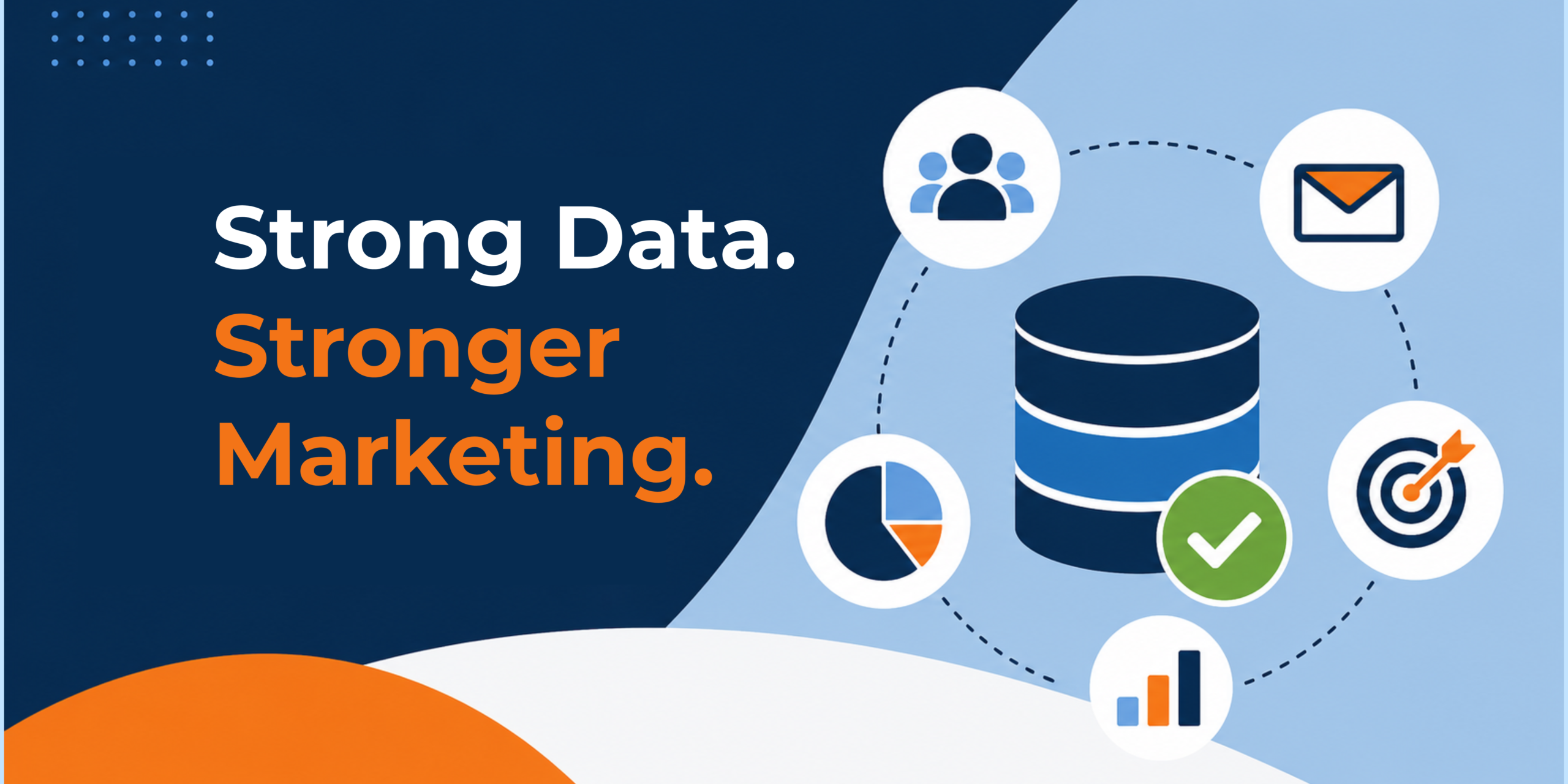
You can have the best marketing strategy, a well-designed email campaign, and a powerful CRM system, but if your data isn't accurate, your marketing won't reach its full potential.
It's something we see all the time. Businesses invest in platforms like Microsoft Dynamics 365, HubSpot, Zoho CRM, or marketing software, expecting immediate results. However, after a few months, they're disappointed. Emails aren't getting the engagement they expected, automations aren’t working quite right, and reports don't seem accurate.
More often than not, the problem isn't the technology. It's the data behind it.
Your Data Is the Foundation of Every Marketing Campaign
Think of your customer data as the foundation of your marketing efforts. Everything you do, from email campaigns and lead nurturing to reporting and customer follow-up, depends on having reliable information.
If your CRM contains duplicate contacts, outdated email addresses, or incomplete customer records, those issues affect every marketing activity.
Better Data Creates Better Customer Experiences
We've all received emails that made us roll our eyes. Maybe your name is misspelled. Maybe you're receiving promotions for a product you've already purchased. Or perhaps you've received the same email multiple times because you exist in their database more than once.
These experiences don't just feel impersonal; they reduce trust and create frustration. When your CRM data is clean and up to date, you can create more meaningful messages by sending the right communication to the right audience at the right time.
Marketing Automation Is Only as Good as the Data Behind It
Marketing automation is designed to save time and improve efficiency, but it relies entirely on the information stored in your CRM. Read that again. It relies entirely on the information stored in your CRM.
If customer records are incomplete or inaccurate, automation can create just as many problems as it solves. For example, inaccurate data can result in leads being assigned to the wrong salesperson, customers receiving emails intended for prospects, duplicate nurture campaigns, or important follow-up opportunities being missed.
Marketing automation’s success completely depends on good data.
How Healthy Is Your CRM?
If you're not sure where to begin, ask yourself a few simple questions:
-
-
- Are there duplicate contacts in your CRM?
- Is customer information complete and consistent?
- Can your sales and marketing teams trust their reports?
- Are you collecting information that supports your business goals?
-
If you answered "no" to any of these questions, improving your data quality should move up your priority list.
Small Improvements Can Have a Big Impact
The good news is that improving your data doesn't have to be overwhelming. Simple steps like removing duplicate records, standardizing data entry, validating email addresses, and regularly reviewing your CRM can dramatically improve the performance of your marketing efforts.
Remember, better data leads to better segmentation. Better segmentation leads to more relevant communication. And more relevant communication leads to stronger customer relationships.
The Truth Is
Marketing technology continues to evolve, but one thing hasn't changed: your marketing is only as strong as the data behind it.
Before investing in more automation, another campaign, or another marketing tool, take a close look at the information already in your CRM. A strong data foundation doesn't just improve marketing performance; it helps every department make better decisions, serve customers more effectively, and grow with confidence.
If you're ready to improve your CRM data, strengthen your processes, or create more effective marketing segments, TopLine Results is here to help. Contact us at 1-800-880-1960 or info@toplineresults.com.