
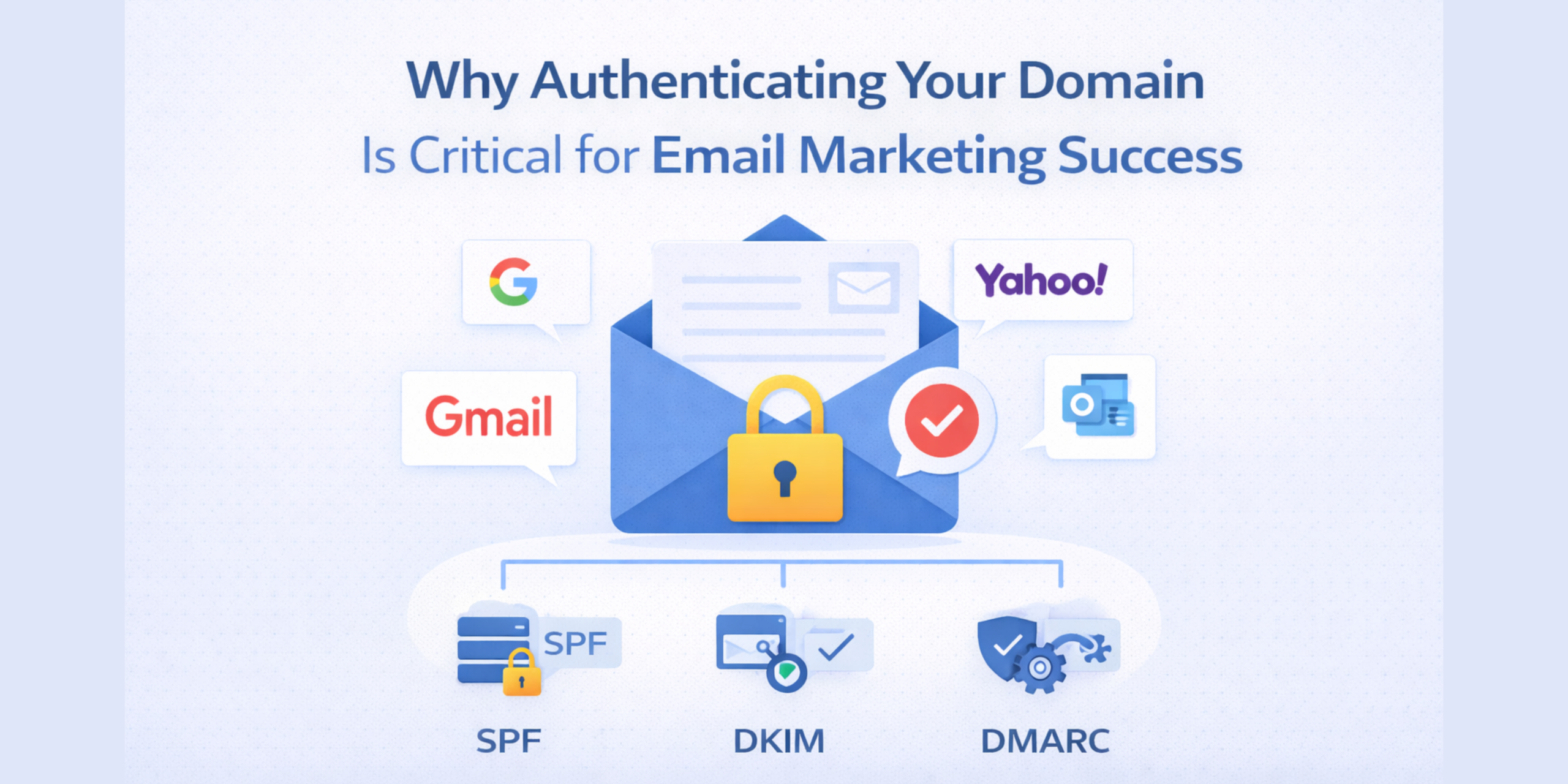
Email marketing remains one of the most effective ways to engage your audience, but only if your emails actually reach their inbox.
With increasing security standards and stricter requirements from providers like Google, Yahoo, and Microsoft, domain authentication is no longer optional; it’s essential.
If you’re sending marketing emails without authenticating your domain, you risk poor deliverability, damaged sender reputation, and even having your emails blocked entirely.
Here’s what you need to know:
What Is Domain Authentication?
Let’s start from the beginning. Domain authentication is the process of verifying that your emails are legitimately sent from your domain.
It’s done through a set of technical records added to your domain (DNS), including:
-
-
- SPF (Sender Policy Framework): Defines which servers are allowed to send emails on your behalf
- DKIM (DomainKeys Identified Mail): Adds a digital signature to verify message integrity
- DMARC (Domain-based Message Authentication, Reporting & Conformance): Tells receiving servers how to handle unauthenticated emails
- Together, they act like a digital ID system for your emails.
-
Why Authentication Matters More Than Ever
Inbox Placement Depends on It
Email providers are prioritizing security and trust.
If your domain isn’t authenticated:
-
-
- Your emails are more likely to go to spam
- Or be blocked entirely
-
Authentication lets inboxes know that your emails are legitimate and safe.
It Protects Your Brand from Spoofing
Without authentication, anyone can attempt to send emails that appear to come from your domain.
This opens the door to:
-
-
- Phishing attacks
- Brand impersonation
- Loss of customer trust
-
Authentication helps prevent unauthorized use of your domain.
It Improves Deliverability and Performance
Even if your emails are being delivered, a lack of authentication can hurt performance:
-
-
- Lower open rates
- Reduced engagement
- Inconsistent campaign results
-
Authenticated domains are seen as more trustworthy, which can lead to better inbox placement and stronger results.
It’s Now Required by Major Email Providers
Google, Yahoo, and others have introduced stricter requirements for bulk senders.
To meet these standards, you must:
-
-
- Authenticate your domain
- Maintain a low spam complaint rate
- Include proper unsubscribe links
-
Failing to comply can result in:
-
-
- Email rejection
- Delivery delays
- Reduced visibility in inboxes
-
The Bottom Line
Domain authentication isn’t just a technical requirement; it’s the foundation for successful email marketing.
It directly impacts:
-
-
- Deliverability
- Security
- Brand trust
- Campaign performance
-
When your domain isn’t properly authenticated, whether your working in HubSpot, Click, Constant Contact, MailChimp or Zoho, even the best email strategy won’t perform the way it should.
If you’re unsure whether your domain is properly authenticated, we can help by reviewing your setup and recommending the necessary improvements. Contact us today at info@toplineresults.com or call 1-800-880-1960.